


Citroën DS3 WRC | Drivers, Specs, Videos, Photos
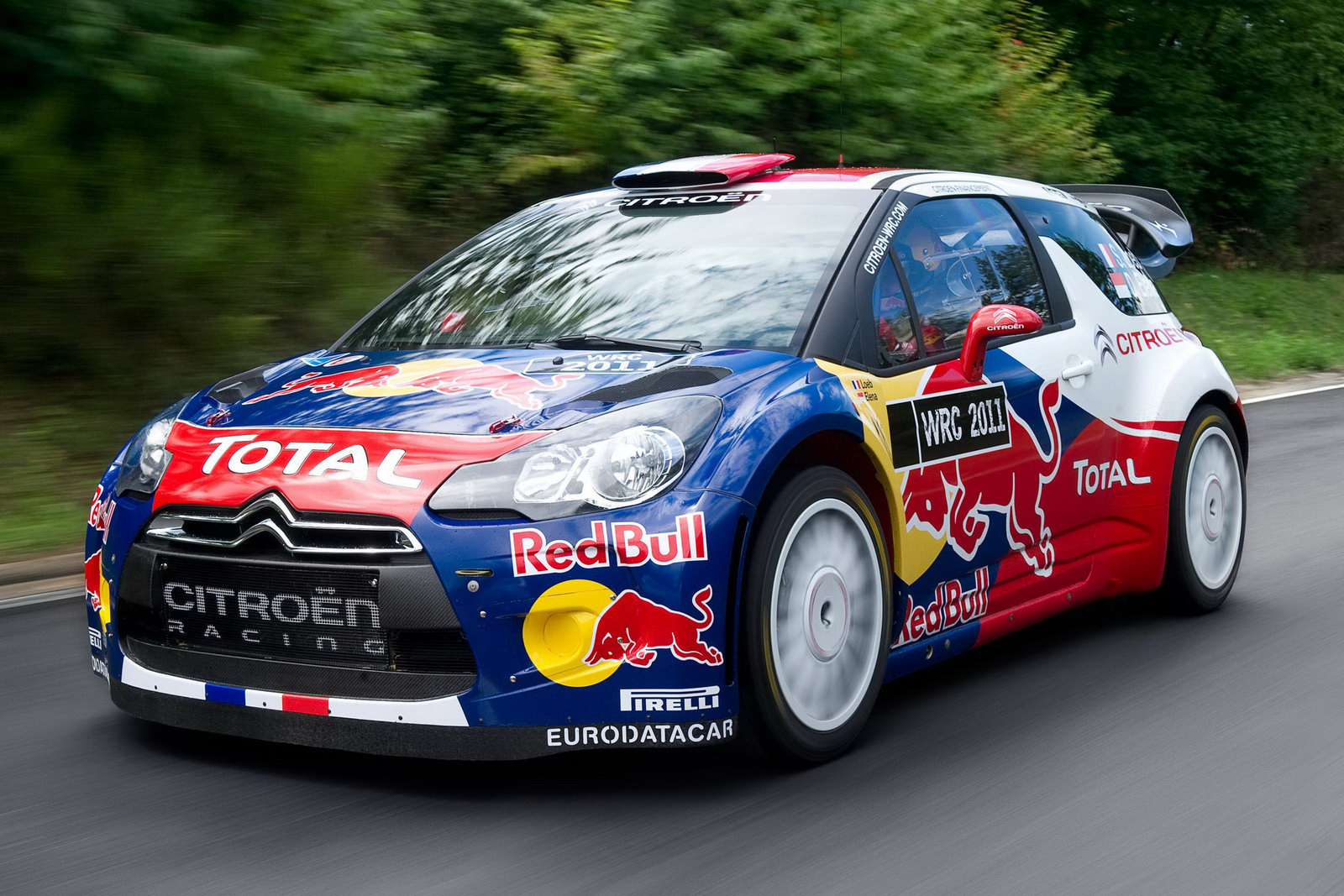 The Citroën DS3 WRC is the World Rally Car built for the Citroën World Rally Team by Citroën Racing for use from the 2011 World Rally Championship season. It is based upon the Citroën DS3 road car, and replaces the highly successful Citroën C4 WRC.
It is built to the new World Rally Car regulations for 2011, which are based upon the existing Super 2000 regulations, but is powered by a turbocharged 1.6-litre engine rather than the normally aspirated 2-litre engine found in Super 2000 cars.
Development work on Citroën DS3 WRC has been carried out during 2010 by Citroën drivers Sébastien Loeb, Dani Sordo, Sébastien Ogier and test driver Philippe Bugalski as well as sister Peugeot drivers Kris Meeke and Stéphane Sarrazin.
The engine has been specifically developed for this car (older regulations required that the engine be based on an existing mass-produced engine’s cylinder block and head gasket). It officially develops 300 bhp (223.7 kW) at 6,000 rpm and 350 N·m (35.7 kgf·m) at 3,250 rpm.
In October 2012, Citroën announced the Citroën DS3 RRC intended for use in the championships below that of the WRC: WRC-2 (formerly S-WRC), European Rally Championship (ERC), Middle East Rally Championship (MERC), some national championships and so on.
Visually and internally, the two models (DS3 WRC and RRC) are different since the regulations are more restrictive on the RRC. For example, the WRC 1.6-litre turbocharged direct-injection engine has been slightly modified dropping the power from 315 bhp to 275 bhp, visually the bumper intakes are smaller and the rear spoiler complies with the S2000 standards.
The other significant change concerns the brakes in tarmac configuration: the diameter of the discs has been reduced from 355 to 350mm and the water-cooling system has been removed.
Source: Wikipedia